
Some of my clients call Structural Integration the missing link between Physical Therapy and Chiropractic.
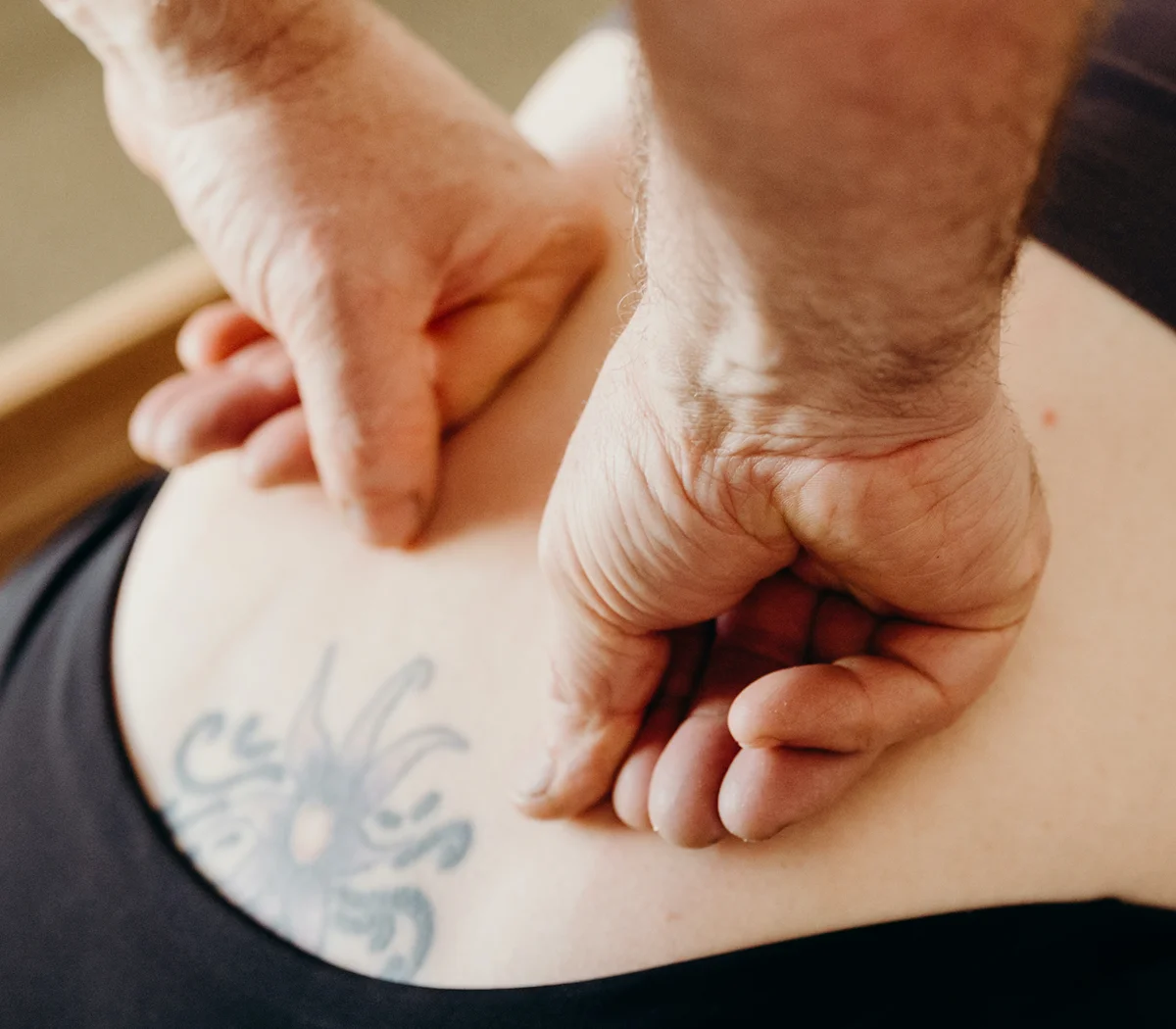
Generally speaking, Chiropractors adjust the bones, PT’s strengthen the muscles but it is the Structural Integrators that manipulate the fascia. From Ida Rolf’s perspective, fascia is responsible for all of the bends, tilts and twists develop while growing up with life’s inevitable impacts and injuries.
Dr Ida P. Rolf, a biochemist knew fascia was the missing link between Chiropractic and Physical Therapy. In the 1940’s she began creating, what she called, “Structural Integration or SI for short.” SI is a system really, consisting of 10 bodywork sessions, designed to interrupt compensation patterns and bring the body into alignment from head to toe.
As the story goes, there is a fascial casing of connective tissue around each cell in our body designed to hold all of our organs, blood vessels, bones, nerves, muscles and so on, in place. Fascia has literally trillions of connections creating a vast 3D shock absorbtion system.
Every time we walk, run, jump or do any movement, we put some sort of load into our bodies. It turns out, it is fascia’s job to absorb loads by utilizing the fascial matrix. Fascia works in 3D, so an impact will be absorbed and dissipate quickly and efficiently, in 3 dimensions. It is a well functioning fascial system that extends the life of our joints.
What tends to happen, is as we grow up and go through life’s inevitable impacts and injuries, our fascia tends to get restricted and stuck to the bony margins around the joints. Over time, if not resolved, restricted fascia becomes unbalanced and can tug the bones into the tilts, bends and twists that we see in so many people today.
The good news is that fascia is changeable. One way to change fascia is through movement that utilizes the whole body, like: yoga, walking and swimming. Our bodies are designed to move and move well. We all have Ferrari bodies that want to go, go, go, but sadly, in our culture, especially now in the Information Age, most of us park our Ferrari’s in an office chair.
Now, there is one thing that both Ferraris and human bodies have in common and it is that both want to move. If you don’t drive a Ferrari very much, carbon builds up in the cylinders, brakes get rusty and the suspension gets squeaky.
Likewise, when you don’t move your body much, joints get stiff and achy. The less we move, the more cranky our body gets.
Our bodies are designed to move and move well. We all have Ferrari bodies that want to go, go, go, but sadly, in our culture, especially now in the Information Age, most of us park our bodies in an office chair.
The good news is that fascia is changeable and one way to change fascia is simply to move it. There are many, many ways to mobilize fascia through movements, small and large. Generally speaking, I like the types movement that utilize the whole body. Yoga, walking and swimming are right up there at the top of my list. It’s never too late to move more and sit less.
There is also a growing number of Structural Integrators, like me, who are skilled in releasing fascial restrictions and improve peoples’ alignment, increase range of motion and relieve chronic pain. Just google, “Structural Integration bodywork near me” to find a practitioner near you. We can really help with relieving fascial restrictions, ease chronic pain and make moving better.
It is down right, magical.